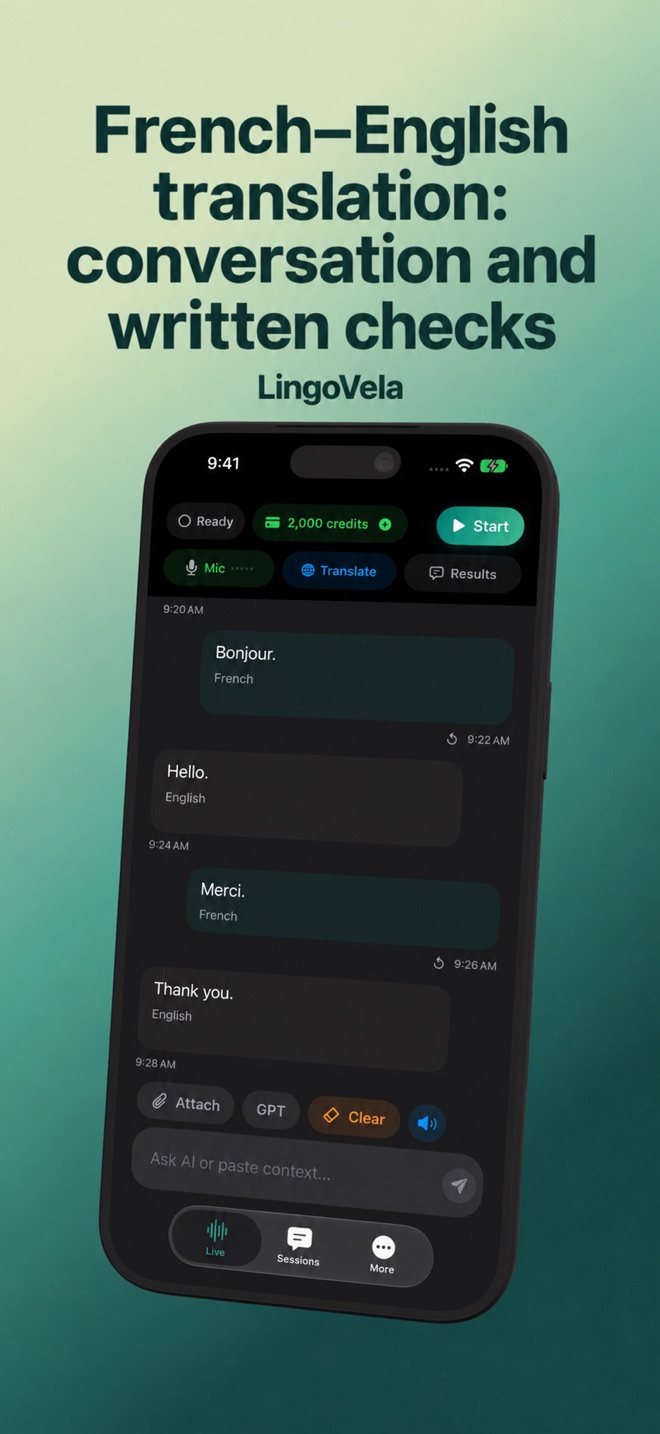
French–English translation: conversation and written checks
A restaurant booking or a family conversation needs more than a translated greeting. Prepare the French–English exchange in both directions, with the names and details you will actually use.
Choose the speech you will hear
If your app offers regional speech settings, choose the form of French and English that matches the speakers. A French interface setting is not itself a speech-recognition setting. Google’s speech guide also notes that dialect settings are available only for some languages.
Start with the captured French text. If a place or person is already wrong there, correcting the English phrasing will not repair the missing information. Ask the speaker to write the name or show the original reservation.
Prepare a reservation test
Use a short invented booking so you can recognise a wrong day or quantity. Let the other person answer, rather than testing only your own English input.
- Ask for a table for three people tomorrow at seven.
- Change the request to four people and confirm whether the date stayed the same.
- Say that you do not want to cancel the booking. Check that the negative meaning remains.
- Have the French speaker reply with a different available time.
- Compare the written details before accepting the arrangement.
Make the register explicit
An English request may leave the relationship between the speakers implicit. If a polite or formal tone matters, phrase your original request accordingly and have a French speaker review important written wording. Do not assume a tool has inferred your relationship from a voice.
Keep each request complete. Splitting a name, date or correction over several unrelated turns can make the exchange harder to follow. Use the screen to point at the detail being corrected.
If you need a written message instead
For an email or short French message, translate a complete paragraph when practical so the references remain clear. Keep the original next to the result. Check who is speaking, who is being asked to act, and whether the message is a request, a refusal or a confirmation.
Copy written names, dates and booking references exactly rather than translating those identifiers. For a file, verify what text has actually been extracted and whether its order is intact; a translated text result does not promise a recreated document layout. Have important outgoing wording checked by a proficient speaker.
Trying the pair in LingoVela
Select the actual conversation languages and inspect availability in the chosen mode. Test typed text, French speech, the English reply and spoken playback as separate steps. We have not independently benchmarked this pair against other apps.
On Device needs compatible prepared speech and translation assets; do not assume French text readiness proves English-to-French voice readiness. Online modes need internet and credits. For an official document or an interaction needing qualified interpreting, arrange the appropriate professional service.