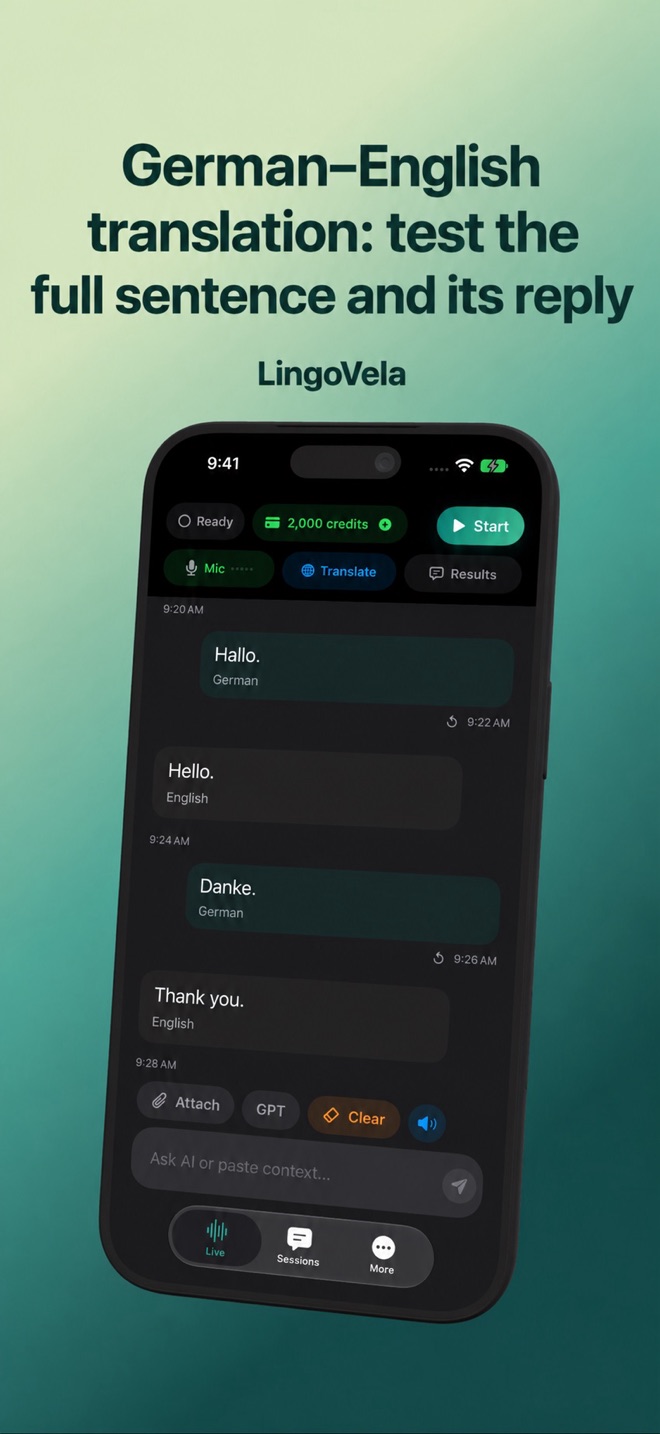
German–English translation: test the full sentence and its reply
German–English translation searches cover emails, documents and live speech. If you need a conversation, test the entire spoken exchange instead of choosing an app from a text-only example.
Decide whether you need speech or a document
A typed paragraph gives a translator different input from a microphone in a station or office. Begin with the task: reading a message, writing an email or speaking with another person. A good result in one task is not a measurement of every other feature.
For live speech, inspect the German original text as well as the English result. Wait for a complete thought before treating an interim fragment as the final meaning. If a sentence seems wrong, ask for the full sentence again rather than repeatedly translating its last word.
Use an appointment rehearsal
Build a test around details you can compare on the screen. These are test prompts, not verified German translations.
- Ask whether an appointment is on Tuesday or Thursday.
- Correct the date while leaving the time unchanged.
- State that you can attend in the morning but not in the afternoon.
- Have the German speaker reply with a building name and room number.
- Write the final date, time and location so both participants can check them.
Keep units and references visible
For a price, a delivery quantity or a specification, show the digits and units next to the translation. A fluent sentence can still contain the wrong number. Do not let an abbreviated spoken reference carry the whole agreement.
If several items are being discussed, name the item again when correcting its delivery date or quantity. For a technical term, keep the original German spelling alongside the English explanation. A bilingual reviewer can then check the particular term rather than guessing what was said.
For German emails and documents
For a written German message, keep related sentences together instead of translating isolated fragments. Inspect whether the English result preserves the person, action, deadline and conditions. The same text may need a dictionary lookup or human review even when the translation reads naturally.
For a document, check the extracted text before translating it. Preserve reference codes, numbers and units, and distinguish the translated wording from document formatting. LingoVela does not promise a reconstructed Word or PDF layout. Use the file-workflow guide for extraction checks and obtain qualified review for important final wording.
Choose the LingoVela mode by readiness
Check the selected German–English pair in the actual app and mode. Local translation, speech recognition and voice output are separate readiness checks. Prepare compatible assets before an offline test; do not infer them from a downloaded text model.
LingoVela requires an active subscription. On Device uses no AI credits; online modes use credits and connectivity. This guide does not claim a tested accuracy or speed winner. Use qualified review when the wording will form part of an important agreement.