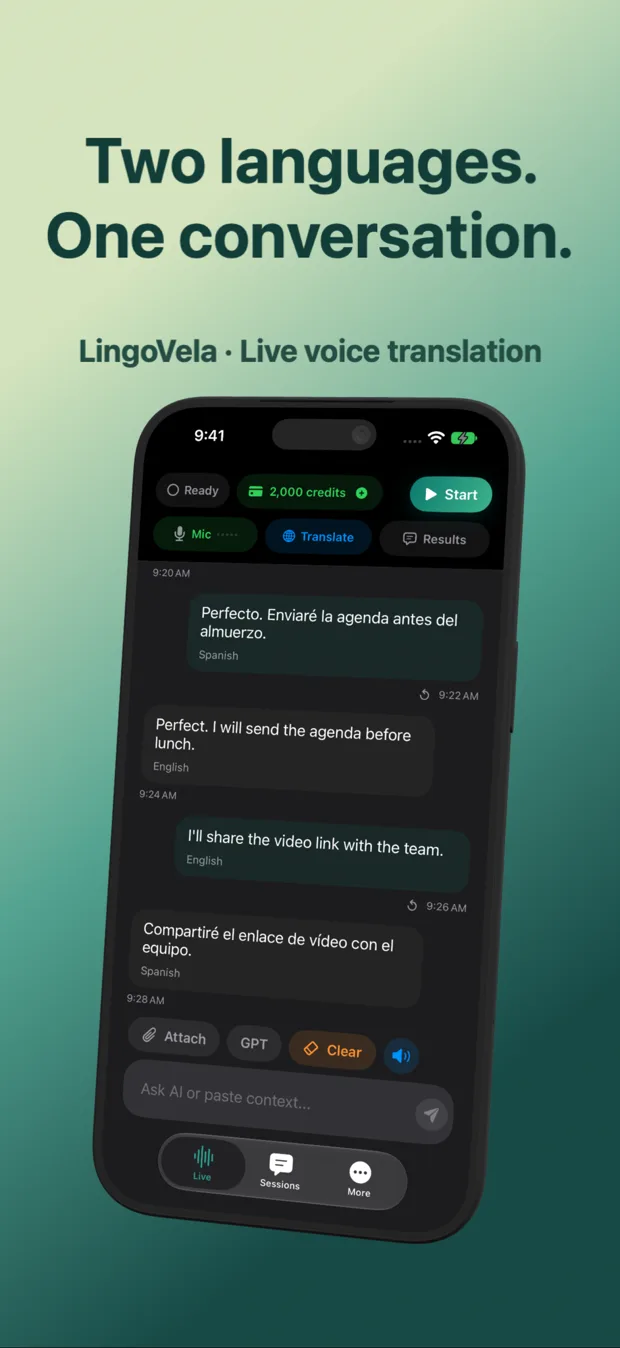
Live voice translator (LingoVela) vs language learning apps (Duolingo, Pimsleur, Babbel)
Learning greeting phrases in Duolingo, Pimsleur or Babbel builds goodwill and confidence—until the local speaker replies at natural speed with ten unfamiliar words. Language courses build long-term memory over months; a live two-way voice translator like LingoVela handles the real-time back-and-forth conversation you need tomorrow morning.
1. Asking a rehearsed question vs understanding an unscripted reply
Two weeks of Pimsleur or Babbel lets you politely ask “Where is the pharmacy?” in Spanish or Japanese. The breakdown happens three seconds later when the local replies “Go past the second traffic light, turn left by the bakery—though they close at two on Wednesdays.”
LingoVela bridges that comprehension gap immediately by capturing the full spoken reply, speaking the translation and saving both languages in your local conversation history so you can even study the real phrases afterward.
| Goal | LingoVela: Live Translate | Duolingo | Pimsleur / Babbel |
|---|---|---|---|
| Hold a real unscripted conversation today | Yes — translates both speakers live | No | Only basic rehearsed survival scripts |
| Understand fast native replies across a counter | Yes — spoken + written translation | No | Requires months of listening progression |
| Build long-term personal fluency & grammar | Supports listening/reading review via local logs | Gamified vocabulary & reading drills | Strong structured audio (Pimsleur) & grammar (Babbel) |
| Works offline on a plane or train | On-Device translation mode (0 credits, active sub) | Limited offline lessons on Super/Max | Downloadable audio lessons |
| Typical monthly US price | $9.99/mo (LingoVela Plus) | Free w/ ads, Super ~$12.99/mo, Max ~$29.99/mo | ~$14.95–$20.95/mo |
2. Using LingoVela alongside language study without becoming dependent
Language learners sometimes worry that carrying a voice translator makes them lazy. In practice, trying your own spoken sentence first and opening LingoVela only when the conversation outpaces your level gives you the courage to talk to locals instead of reverting to English.
| Learner stage | What you say yourself | Where LingoVela steps in |
|---|---|---|
| Complete beginner (trip in 7 days) | Hello, please, thank you, excuse me, numbers 1–10 | Every multi-sentence explanation, check-in, repair or dietary check |
| A2 / B1 intermediate traveler | Ordering food, buying tickets, simple small talk | Unexpected bureaucracy, landlord repairs or fast colloquial replies |
| Heritage / bilingual family partner | Everyday household phrases | Longer emotional or detailed family stories across generations |
3. Reviewing real conversations after the moment
Because LingoVela keeps saved conversations locally on your iPhone or iPad with both the original text and the translation, your real-life errands become personalized study material.
| Time before departure | Best strategy | Why |
|---|---|---|
| Flying out in < 2 weeks | Learn 15 polite greetings + install LingoVela & prepare On-Device packs | Politeness opens doors; LingoVela handles real comprehension |
| 3–6 months before relocation | Daily Pimsleur/Babbel study + LingoVela for Day-1 housing/admin talks | Builds speaking foundation while protecting Day-1 logistics |
| Long-term hobbyist with no immediate trip | Duolingo / Babbel / reading apps | No live two-speaker interpreter needed at home |
Can I use LingoVela by myself to practice pronunciation?
You can speak in your target language and inspect LingoVela’s recognized source text to see whether your pronunciation was understood clearly—though dedicated courses teach phonetics more systematically.
Is LingoVela cheaper than Duolingo Max?
Yes—LingoVela Plus is $9.99/month in the US compared with ~$29.99/month for Duolingo Max, though they serve different primary jobs (live translation vs gamified study).
Does LingoVela save transcripts so I can review phrases later?
Yes. Saved conversations stay locally on your device with both original and translated text.