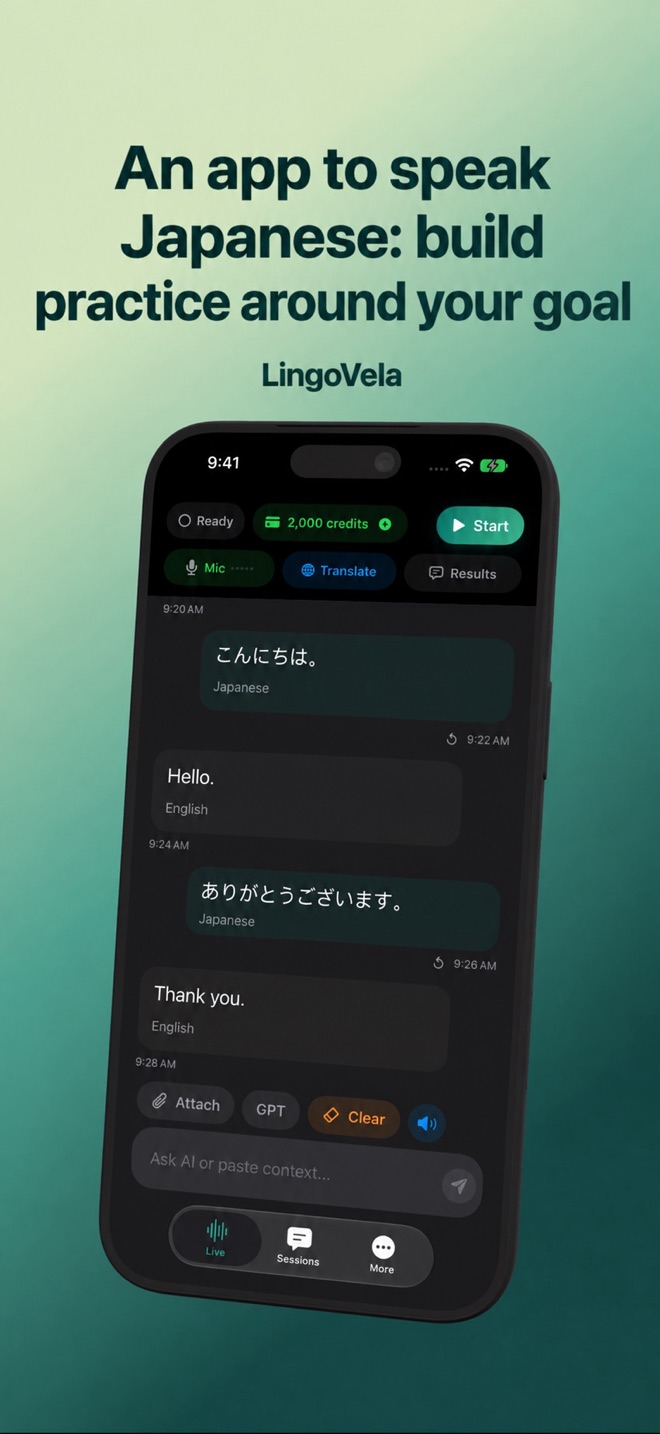
An app to speak Japanese: build practice around your goal
Recognising kana, completing a lesson and talking with a Japanese speaker are related skills, but one app exercise does not prove all three. Choose a tool for the next task you need to perform.
Use a course when you need teaching and progression
The Japan Foundation’s Marugoto site lists online study paths through Minato, including self-study and courses with tutor support. It also links to conversation-video practice, vocabulary recordings and separate kana-learning apps. Check the specific course and enrolment details rather than assuming that every resource includes a teacher.
These options illustrate a useful distinction when comparing Japanese apps: a writing drill, an audio dialogue and live feedback serve different purposes. A translator that gives the meaning of a sentence does not automatically provide any of those learning sequences.
Ask an app to demonstrate the skill you want to practise
Choose a small goal you can attempt without the answer in front of you. Ask what the feedback actually measures before trusting a score.
- For kana, check whether you can recognise and produce the characters after the hint disappears.
- For listening, use a short recording and identify what you understood before reading the transcript.
- For speaking, make an answer with a different detail rather than only repeating the model sentence.
- For conversation, practise understanding an unexpected follow-up and asking for clarification.
- For politeness and context, ask a teacher or proficient speaker which expression suits the relationship and situation.
Check what access and feedback the course actually includes
The Japan Foundation distinguishes self-study and tutor-supported Marugoto courses. Use that distinction when choosing: interactive exercises do not automatically include a teacher reviewing your own spoken answer. Check the specific course listing for the level, support language, enrolment conditions and any scheduled activity.
For another app or course, ask the same questions. Can you hear a reliable reference, attempt a new reply and understand the feedback? If there is human support, find out what work is reviewed and how. If you need offline study, test the actual downloaded material rather than assuming a saved lesson includes an interactive conversation service.
Separate repeating a model from answering someone
Repeating a short recording can help you practise its sound. It is a different task from understanding a reply you did not choose in advance. Use both tasks deliberately and keep their results separate in your notes.
For an original practice check, take an ordinary situation from your course. Listen once, identify the meaning, then put the transcript away and make a reply with a changed detail. Ask a partner for a related follow-up rather than the next line you memorised. Mark the point where you needed help and use it to choose the next exercise.
Use feedback for context as well as recognised words
A correct-looking transcript is not an assessment of the relationship, tone or situation in which you use the sentence. For a workplace exchange, tell your teacher or proficient partner who is speaking to whom and what you want to achieve. Ask which part of your wording should change for that context rather than applying a universal formality rule.
Keep a small record of a task you can now attempt, a reply you understood and an expression you still need checked. A lesson counter or exam-study label does not by itself establish readiness for an unscripted conversation. We do not claim measured learning gains or a fixed time to conversational Japanese.
Practise a small exchange, then change it
Pick one everyday situation and use a reliable lesson recording as your reference. The Japan Foundation links to downloadable Irodori materials and audio as well as its online resources.
- Listen once for meaning, then read the Japanese and check what you missed.
- Say a short reply aloud and compare it with the reference recording.
- Put the reference away and change one detail, such as the person or time.
- Use a translator to check the meaning you intended, while inspecting the recognised source text.
- Keep one uncertain expression for a teacher to check instead of memorising an unexplained correction.
When the task is speaking with someone today
If a colleague, family member or host needs to understand you now, a conversation translator may be more useful than beginning a lesson. Set the language direction, keep sentences short and verify names, times and quantities. Give the other person time to read or hear the result.
Translation can help the exchange continue while you learn. It is not evidence that you can independently produce that sentence, and a successful transcript is not a validated assessment of Japanese pronunciation or politeness.
Use LingoVela for the translation part
We are LingoVela’s developer. The app supports conversation translation, not a Japanese course, a JLPT programme or pronunciation grading. This guide provides selection criteria and official learning resources, not a measured ranking of teaching apps.
LingoVela requires an active subscription. On Device uses no AI credits but needs compatible prepared assets; online modes require connectivity and credits. Check Japanese and the other language in the actual mode you plan to use. A language appearing in a picker is not a guarantee that every speech workflow is supported.
Which app should I choose to learn to speak Japanese?
Start with the skill you need: a course for progression, recordings for listening and spoken practice, or a tutor for contextual feedback. A conversation translator helps a current exchange but does not replace those learning tasks.
Does LingoVela grade my Japanese pronunciation?
No. It does not offer validated pronunciation scores or a Japanese curriculum. Check uncertain pronunciation with a reliable recording or teacher.
Does every Marugoto online course include teacher feedback?
The Japan Foundation describes self-study and tutor-supported course types separately. Check the particular course listing and enrolment details rather than assuming that all online exercises include a teacher.
How should I check progress beyond repeating a Japanese recording?
Try a changed detail and a related follow-up without the transcript in front of you. Note where you needed help, and ask a teacher or proficient speaker to check meaning and context. This is a practice check, not a validated proficiency test.