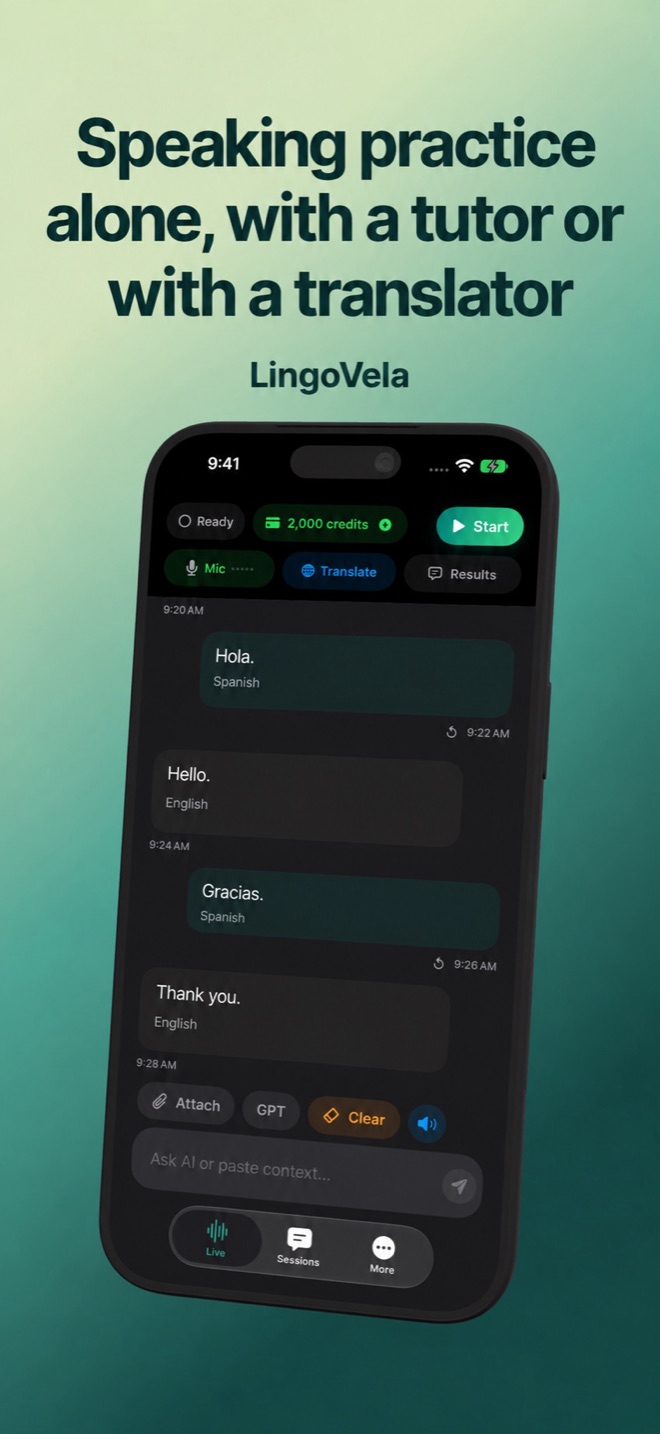
Speaking practice alone, with a tutor or with a translator
Choose whether you want to make your own sentences, receive teaching feedback or translate an exchange happening now. A single app activity does not prove all three.
Start with your own sentence
Say what you can without the app first. Then translate the intended meaning and compare the two. If the app misunderstood the source speech, check recognition before deciding that your grammar was wrong.
If you have no speaking partner today
Use one real situation, such as explaining a delayed arrival. A short recording lets you compare what you actually said with the meaning you intended. Use a recording app you have chosen; this is not a promise of a recording feature inside LingoVela. Keep any recording private unless you choose to share it for feedback.
- Write the intended meaning in a language you know well, then put that note aside.
- Say your version in the language you are practising and make one short recording.
- Listen back and note whether the person, time and main action are clear.
- Compare with a checked learning example or ask a teacher about one uncertain expression.
- Change one detail and try again without reading a generated translation aloud.
- A successful speech transcript does not certify pronunciation or grammar.
- If you cannot tell whether a phrase is correct, keep the question for a teacher rather than repeating it until it feels familiar.
Imitating a recording and answering are different tasks
British Council describes shadowing as repeating speech just behind a recording. Use a short passage you understand and compare its rhythm with your own.
Then put the recording aside and express a different meaning. Reproducing a model does not show that you can choose an answer to an unexpected question.
Use an AI roleplay when you want a reply
Speak documents scenario-based Free Talk with optional hints and corrections. Check your own language, plan and app version. This is a learning activity, not a LingoVela feature.
For a practice scenario, choose who you are talking to and what you need to accomplish. Answer without reading a prepared translation, then note one correction to check. A cooperative AI reply alone does not validate your pronunciation or establish a proficiency level.
Practice one small exchange
Use a realistic situation and repeat it with different details.
- Ask for a ticket, a meal or directions in a short sentence.
- Read and listen to the translation, then say it yourself.
- Change the quantity, destination or time and try again.
- Ask a tutor or proficient speaker about differences you cannot explain.
Before replacing a course such as Duolingo
Check the actual activity in the course, language and plan you use. Duolingo’s own published description of guided Video Call includes questions, phrase suggestions and feedback. It would be too broad to assume that a course app only asks you to recognise words. Availability and the exercise you can access still need checking in your own app.
For a language exchange, Tandem describes a reciprocal arrangement: each person helps the other practise their target language. Agree on speaking time, topic and how you want corrections. A useful exchange depends on what you arrange together, not merely on having installed an app.
- Choose a tutor when you want a planned lesson and explanations of your mistakes.
- Choose a course conversation activity when its prompts and feedback match your level and goal.
- Choose a language exchange when you want mutual conversation practice and can agree on a routine.
- Choose a translator when two people need to understand each other now; it does not grade the learner.
Learning to speak Mandarin is a separate product choice
If your search for a “speak Chinese app” is about learning Mandarin, compare structured teaching and feedback rather than only the ability to translate a sentence. SuperChinese’s own FAQ describes a Mandarin course with recorded speaking practice and pronunciation feedback. That is a different workflow from LingoVela’s conversation translation.
Check the exact store developer if you mean a particular app named Speak Chinese; the phrase alone does not identify its features. LingoVela does not provide a Mandarin curriculum, an HSK course or validated tone scores. Ask a tutor or proficient speaker to review pronunciation rather than treating a successful transcript as a passing grade.
Use LingoVela appropriately
LingoVela’s translated conversation can support this exercise. It does not promise graded lessons, pronunciation scoring or spaced repetition. Offline practice requires supported prepared assets and an active subscription, even though On Device uses no AI credits.
Check rather than memorise errors
An idiom, regional expression or ambiguous sentence may have several valid translations. Keep the intended context and confirm important phrases with a trustworthy learning resource rather than memorising the first generated answer.
Can I practise speaking without a partner?
You can make and review your own sentences, compare them with a checked reference and note questions for a teacher. A solo recording does not provide independent correction or test an unpredictable reply.
Should I replace my course with LingoVela?
LingoVela supports conversation translation, not a teaching curriculum or validated pronunciation grading. Check the specific speaking activity in your course before deciding you need a different tool.