LingoVela vs Timekettle & translation earbuds: phone-first speech vs sharing earbuds
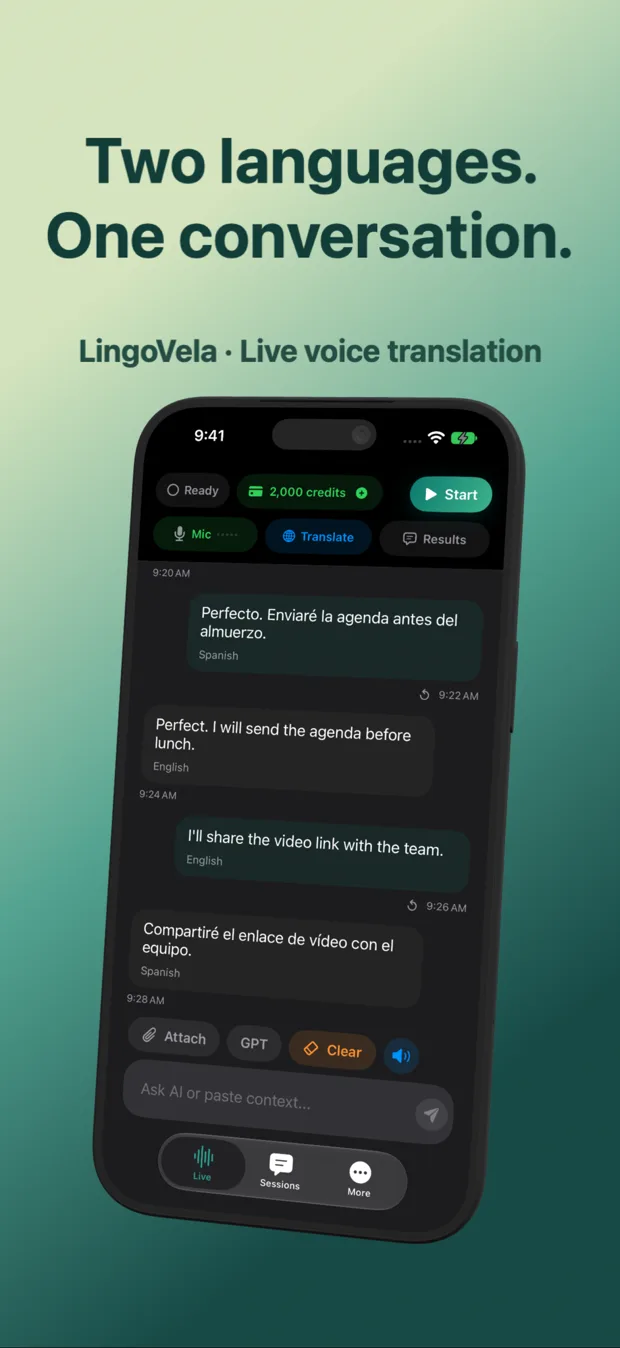
Dedicated translation earbuds such as Timekettle promise simultaneous split-ear conversations where two people each wear one bud. That works well for spouses, family members or planned business meetings—but fails in everyday travel when a taxi driver, pharmacist or shopkeeper understandably refuses to put a stranger’s earbud in their ear. LingoVela works immediately on your iPhone screen and speaker, or with your own AirPods.
1. Real-world friction: sharing an earbud vs sharing a screen
Split-earbud systems shine in 30-minute seated conversations with a trusted partner where both people wear an earbud and maintain eye contact. Outside that scenario, pairing cases, handing over an earpiece, explaining touch gestures and wiping ear tips add friction before the first sentence is even spoken.
LingoVela requires zero hardware handover: place your iPhone or iPad between both speakers, or keep your own AirPods in for private listening while showing/playing translated replies on the phone for the other person.
| Dimension | LingoVela (iPhone / iPad + optional AirPods) | Dedicated Translation Earbuds (e.g., Timekettle) |
|---|---|---|
| Time to first translated sentence | Seconds: open app, confirm 2 languages, speak | 30–90s: uncase buds, pair companion app, hand bud to partner |
| Works with strangers at counters / taxis | Yes — nobody touches your hardware | Poor fit — strangers rarely accept a shared in-ear bud |
| Hands-free eye contact for 45-min family chat | Shared table screen; turn-by-turn pacing | Strong — dual-bud simultaneous / touch modes |
| Visual verification of numbers & names | Both speakers see original + translated text on screen | Listeners hear audio first; must check companion phone screen to verify digits |
| Echo / self-hearing risk | Low with headphones; speaker playback needs clean turn-taking | Low when both wear buds; speaker mode falls back to phone mic |
2. Offline packs, companion app lock-in and privacy
Translation earbuds are not standalone computers—almost all consumer models tether over Bluetooth to a proprietary iOS companion app that handles cloud speech recognition, account sign-in and paid offline fish/coin packs.
LingoVela runs directly on iOS 26+ with no user registration, saved transcripts kept locally on the phone, and three transparent processing modes (OpenAI Online, Apple Private Cloud Compute and 0-credit On-Device offline).
| Technical factor | LingoVela: Live Translate | Translation Earbud Systems |
|---|---|---|
| Requires phone app anyway? | Runs directly on iPhone / iPad | Yes — most models require vendor companion app on iPhone |
| Offline language pricing | Included in $9.99/mo subscription at 0 AI credits (supported pairs) | Often sold as per-pair offline packs or higher hardware bundles |
| Account sign-in | None (anonymous device account) | Vendor account registration typically required |
| Works with standard AirPods | Yes — uses standard iOS audio routes (test mic/playback route first) | Requires vendor’s proprietary earbuds for split-bud modes |
3. Cost & who actually benefits from earbud hardware
Before spending $150–$350 on single-purpose translation earbuds that cannot replace AirPods Pro for daily music and calls, test a phone-first conversation workflow. Reserve dedicated dual earbuds for bilingual couples, in-laws or recurring 1-on-1 coaching sessions where both participants happily wear them.
| Situation | Recommended setup | Why |
|---|---|---|
| Hotels, clinics, shops, taxis and spontaneous travel talks | LingoVela on iPhone | Instant start, readable screen confirmation and zero ear-sharing hygiene issues |
| Hour-long dinner with bilingual family or partner who shares buds | Translation earbuds or iPad with LingoVela | Split earbuds enable natural eye contact; iPad offers effortless shared reading |
| Traveler who already owns AirPods | LingoVela + your existing AirPods | Avoids buying and charging a second Bluetooth case ($9.99/mo vs $150–$350) |
Do AirPods automatically give two people separate microphones in every app?
No. Standard Bluetooth routing on iPhone uses one active input route at a time; always test who the microphone hears and who hears the spoken reply before an important talk.
Why does a voice translator sometimes translate its own spoken reply?
If phone speaker volume is loud and listening resumes immediately, the mic can pick up playback. Let spoken output finish or use headphones for one listener.
Does LingoVela require buying proprietary hardware?
No. LingoVela is software-only for iPhone and iPad.