Polite vs Casual Speech in Voice Translators (Tu/Vous, Usted, Keigo, Yo)
Mastering polite vs informal register control comes down to two practical habits: english 'you' hiding whether you mean intimate 'tu/tú/du' or respectful 'vous/usted/sie' and phrasing your english source sentence politely ('could you please...') so ai translation selects respectful target forms. Using live speech recognition, dual-language verification, and zero-upload browser drills on iPhone and iPad gives you immediate, objective feedback.
Why polite vs informal register control trips up smart learners and travelers
Reading silently in a textbook builds passive recognition, yet real spoken turns demand English 'you' hiding whether you mean intimate 'tu/tú/du' or respectful 'vous/usted/Sie'. Without visual confirmation of what a speech recognizer actually heard from your mouth, subtle vowel, stress, or register errors go unnoticed for months.
Equally important is phrasing your English source sentence politely ('Could you please...') so AI translation selects respectful target forms. Seeing both the captured source transcript and the target translation side by side lets you catch misunderstandings in half a second rather than three minutes later.
5-minute repeatable iPhone & browser routine
Run this short, low-pressure routine before your trip, exam, or meeting.
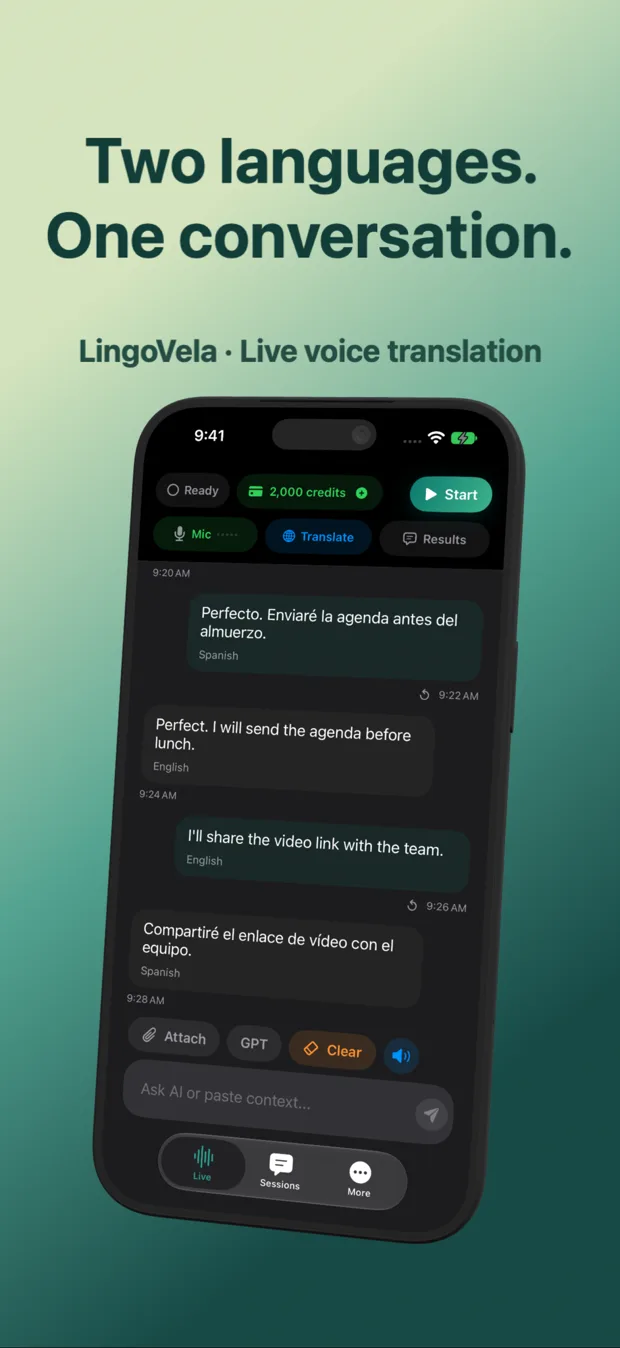
- Open Polite Travel Survival Phraseboard (/tools/travel-phrasebook-tts-audio-board/) in Safari or launch a live LingoVela session in your target language pair.
- Speak a concrete test sentence aloud: 'Excuse me, could you please tell me which counter handles tax-free refunds?'
- Check the recognized transcript word for word—if a word changed, slow down slightly on that syllable rather than speaking louder.
- Play the spoken translation and shadow its rhythm once out loud to lock in natural cadence.
Combining solo speaking practice with a live conversation safety net
The fastest way to gain real confidence abroad is starting every cafe, hotel, or family interaction in the local language yourself—while keeping LingoVela open on your iPhone so you can immediately understand fast, idiomatic replies without panic.
How do I steer an English-to-French or English-to-Japanese translation toward polite forms?
Start your English sentence with 'Excuse me, could you please...' rather than blunt imperatives like 'Give me...'—neural translators mirror source politeness cues.
Can I practice this offline on a flight?
Yes—once you download supported language and speech packs over Wi-Fi, LingoVela's On-Device mode runs in Airplane Mode using zero AI credits.