How On-Device Speech-to-Speech Translation Works on iPhone Neural Engine
Running two-way spoken translation with zero cellular signal used to sound impossible on a phone. Modern Apple Silicon Neural Engines execute quantized speech recognition, sequence-to-sequence translation, and neural speech synthesis locally in milliseconds—with zero audio ever leaving your device.
The 3-stage local pipeline: ASR -> NMT -> Neural TTS
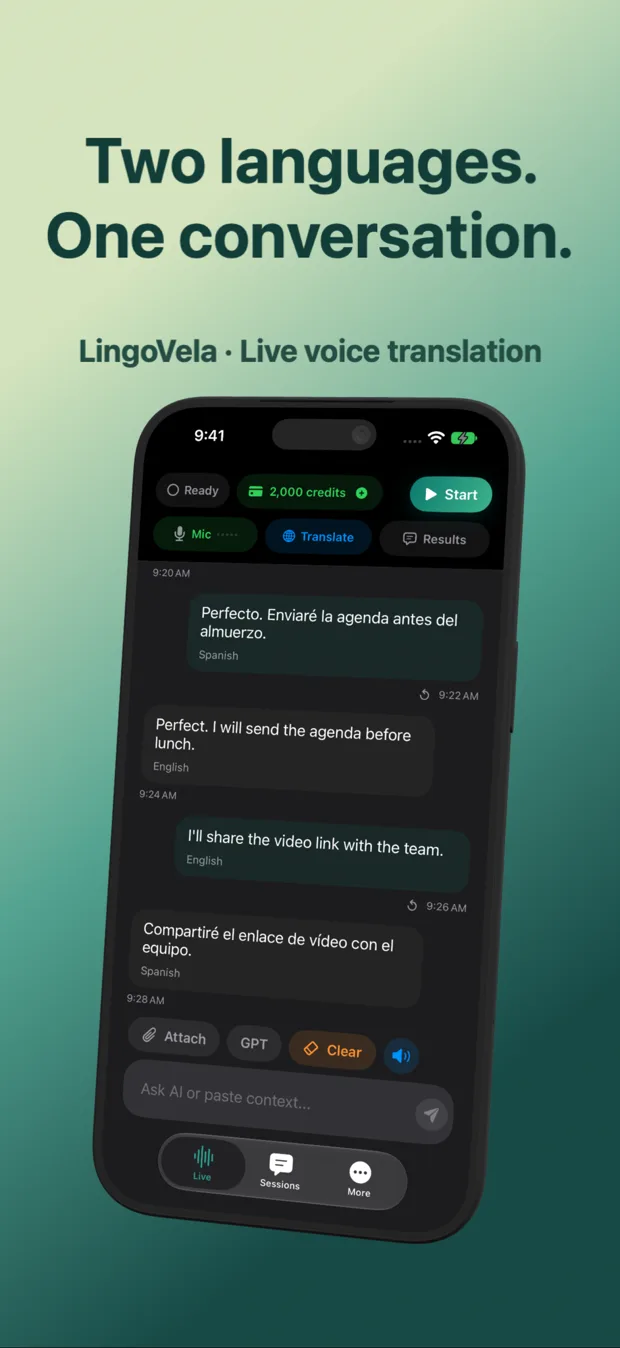
Unlike end-to-end cloud multimodal models that stream raw audio to remote GPU clusters, local iOS translation chains three compact Apple-managed frameworks: local speech transcription converts waveforms into source text, on-device translation maps source text into the target language, and local voice synthesis speaks the settled sentence.
Exposing the intermediate source transcript on screen is a major reliability win: if background cafe clatter distorts a word, you spot it immediately before the wrong meaning is spoken.
When cloud AI still adds value—and why mode choice matters
Local models prioritize determinism, privacy, and zero-connectivity survival, while larger cloud models (Apple Private Cloud Compute or OpenAI) handle broader language pairs and colloquial idioms. LingoVela never hides which engine is active—you pick the mode that fits the sensitivity and connectivity of each conversation.
Does On-Device translation drain iPhone battery faster than cloud mode?
In areas with weak 1-bar cellular reception, local Neural Engine inference often uses LESS battery than a hot 5G modem repeatedly retransmitting audio packets.