Cantonese vs Mandarin Voice Translation on iPhone (Hong Kong, Taiwan & China)
Real Cantonese and Mandarin Chinese voice translation conversations rarely fail on basic nouns—they fail on spoken cantonese (yue / zh-hk) being mutually unintelligible with spoken mandarin (zh-cn / zh-tw) and traditional characters (hong kong, macau, taiwan) vs simplified characters (mainland china & singapore). Preparing your iPhone or iPad with the right translation mode, visual transcript habits, and offline backup turns stressful exchanges into calm, verifiable dialogues.
The two biggest pitfalls in Cantonese and Mandarin Chinese voice translation
First, watch out for spoken Cantonese (yue / zh-HK) being mutually unintelligible with spoken Mandarin (zh-CN / zh-TW). Generic phrasebooks gloss over this, leaving you confused as soon as the other person responds at natural speed.
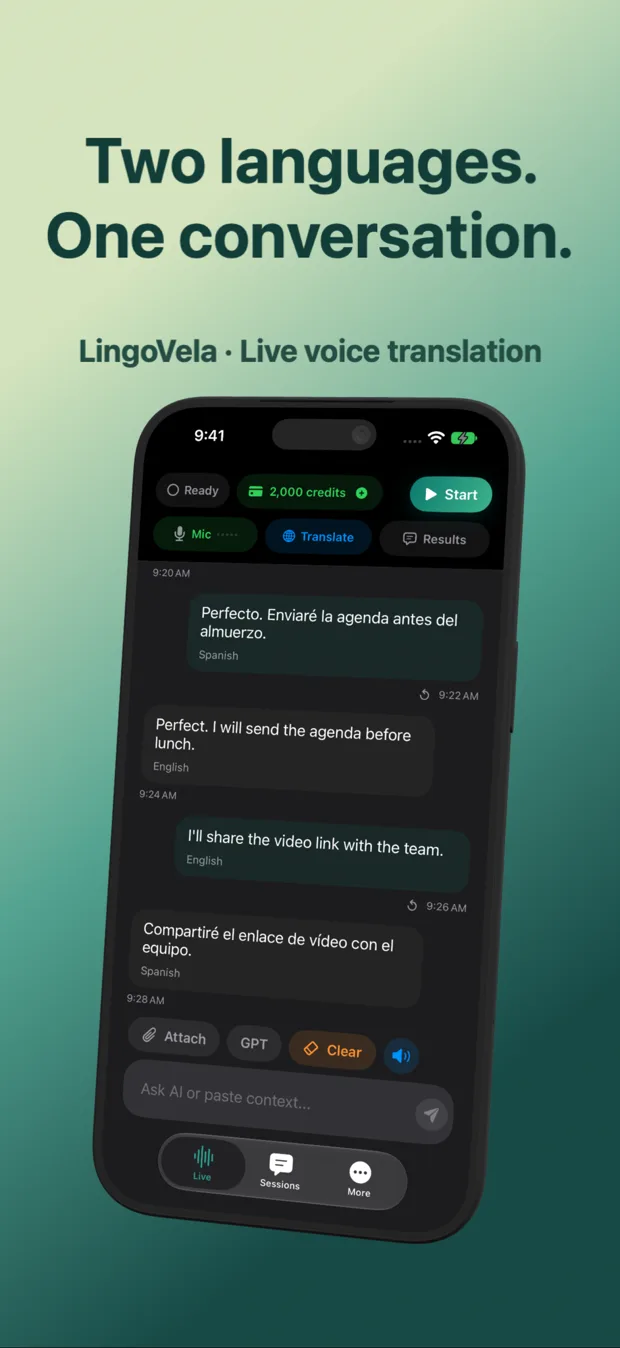
Second, pay close attention to Traditional characters (Hong Kong, Macau, Taiwan) vs Simplified characters (Mainland China & Singapore). Because LingoVela displays the recognized source words alongside the settled translation, both speakers can verify critical details before acting on them.
Step-by-step iPhone & iPad workflow that prevents misunderstandings
Keep sentences concise—one clear idea per turn—and always confirm names, times, and amounts visually on screen.
- Select both spoken languages and confirm whether you are using On-Device (offline, 0 credits), Apple Private Cloud Compute, or OpenAI · Online.
- Run a quick pre-check phrase such as: 'Could we have a table for four, and which dim sum dishes are vegetarian?'
- Wait half a beat after the speaker finishes so final punctuation and clause-end negations settle cleanly.
- Point to numbers, dates, or addresses on the dual-language transcript so the other person gives an explicit nod.
Offline readiness & free zero-upload preparation tool
Before heading into buildings with thick stone walls, subways, or roaming dead zones, test your downloaded language pair in Airplane Mode—and bookmark our free browser Script & Character Counter Helper (/tools/ipa-phonetic-and-romanization-helper/) for zero-upload practice or quick visual cards.
Will Traditional vs Simplified Chinese script affect whether locals can read my screen?
Yes—always choose Traditional Chinese (zh-Hant) in Taiwan and Hong Kong, and Simplified Chinese (zh-Hans) in Mainland China.
Should I use On-Device or OpenAI mode for this scenario?
Use On-Device when offline, conserving AI credits, or keeping speech strictly local on supported pairs; switch to OpenAI · Online or Private Cloud Compute when you have solid signal and want wider idiomatic coverage.